
Categories
Diablo IV

Diablo 4 Season 13: Best Rogue Builds to Play Right Now

The Rogue remains one of the most exciting and versatile classes in Diablo 4 Season 13. With unmatched mobility, devastating burst damage, and multiple viable endgame setups, Rogue players can dominate nearly every activity in the game. Whether you prefer ranged combat, stealth assassinations, or fast-paced melee gameplay, Season 13 offers several powerful Rogue builds capable of clearing high-tier content efficiently.

Heartseeker Rogue – Best Overall Rogue Build

Heartseeker Rogue has become one of the most dominant builds in Diablo 4 Season 13. The build transforms a simple Basic Skill into an endgame powerhouse capable of melting elite enemies and bosses with overwhelming single-target damage.

Recent build guides continue to rank Heartseeker as an S-tier Rogue setup thanks to its incredible consistency and scaling potential.

Why Heartseeker Is So Strong

Heartseeker works by combining rapid attacks, critical strike scaling, and cooldown interactions to create near-constant pressure on enemies. Legendary synergies and specialized Diablo 4 Items allow the build to chain damage through multiple targets while maintaining excellent boss damage.

The build excels because it offers:

·High single-target DPS

·Strong survivability

·Excellent mobility

·Smooth controller gameplay

·Reliable endgame scaling

Unlike some mechanically demanding Rogue builds, Heartseeker offers a more accessible playstyle while remaining one of the strongest options in the game.

Best Diablo 4 Items for Heartseeker Rogue

Heartseeker Rogues benefit heavily from optimized gear setups. Important Diablo 4 Items often include:

·Paingorger’s Gauntlets

·High Critical Strike weapons

·Vulnerable damage gear

·Cooldown reduction affixes

·Attack speed bonuses

Players farming top-tier Diablo 4 Items frequently prioritize boss farming and Nightmare Dungeons to complete their Heartseeker setups efficiently.

Rapid Fire Rogue – Best Ranged Build

For players who enjoy traditional bow gameplay, Rapid Fire Rogue remains one of the best ranged builds available in Season 13.

Icy Veins currently ranks Rapid Fire as an S-tier endgame build thanks to its incredible single-target burst and efficient dungeon-clearing potential.

Why Rapid Fire Excels

Rapid Fire allows Rogues to unleash powerful arrow volleys that ricochet through enemies while maintaining safe ranged positioning.

The build offers:

·Excellent ranged safety

·Strong leveling performance

·Fast, clear speeds

·Great boss damage

·Beginner-friendly gameplay

Rapid Fire is particularly popular among players who want a smoother leveling experience before transitioning into high-end endgame content.

Recommended Skills

Most Rapid Fire setups include:

·Rapid Fire

·Dash

·Shadow Clone

·Dark Shroud

·Cold Imbuement

·Shadow Imbuement

The build scales extremely well with endgame Diablo 4 Items that boost Critical Strike Damage and Vulnerable Damage.

Flurry Rogue – Best Melee Build

Players who prefer aggressive melee combat should strongly consider Flurry Rogue in Season 13.

Flurry focuses on rapid close-range attacks combined with mobility and AoE burst damage. While melee Rogue builds have struggled in previous seasons, Season 13 improvements have helped Flurry become a far more competitive option.

Strengths of Flurry Rogue

Flurry shines because of its speed and fluid gameplay. The build allows Rogues to dash through enemy packs while constantly applying damage and status effects.

Key strengths include:

·Fast-paced melee combat

·Excellent AoE clearing

·Strong mobility

·Fun gameplay mechanics

·Great farming potential

Although Heartseeker and Rapid Fire generally outperform Flurry in boss damage, many players prefer Flurry because of its engaging combat style.

Best Diablo 4 Items for Flurry

Flurry Rogues typically focus on:

·Attack speed gear

·Shadow damage bonuses

·Cooldown reduction

·Defensive legendary aspects

·Energy regeneration affixes

Optimized Diablo 4 Items can significantly improve the build’s survivability in high-tier content.

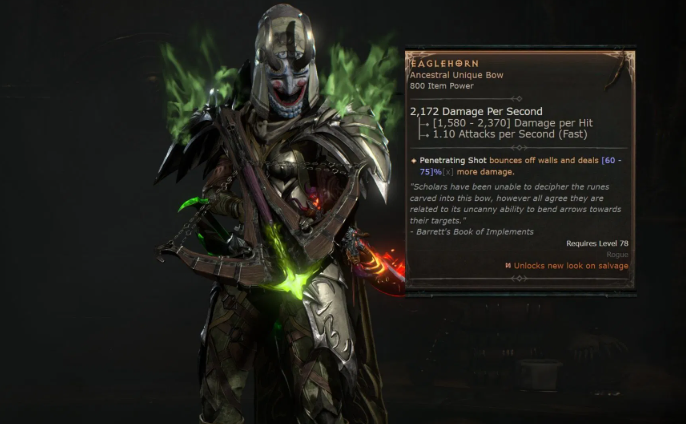
Penetrating Shot Rogue – Best Pit Push Build

Penetrating Shot Rogue remains one of the strongest high-end builds for players focused on clearing the highest Pit tiers possible.

Current Season 13 class guides rank Penetrating Shot among the top Rogue builds for advanced players.

Why is a penetrating shot powerful

This build focuses on massive piercing attacks capable of deleting elite groups instantly. With the proper Diablo 4 Items, Penetrating Shot can deliver absurd burst damage numbers while maintaining strong ranged safety.

The build excels in:

·High-tier Pit pushing

·Elite farming

·Endgame boss encounters

·Burst damage situations

However, Penetrating Shot typically requires stronger gear optimization than Heartseeker or Rapid Fire.

Best Rogue Build for Beginners

New Rogue players should strongly consider starting with either Heartseeker or Rapid Fire.

Community discussions consistently recommend these builds because they offer smoother gameplay loops and lower gear requirements.

Both builds provide:

·Easy-to-learn rotations

·Strong leveling efficiency

·Excellent survivability

·Reliable endgame transitions

For players farming early Diablo 4 Items, these builds offer the best combination of power and accessibility.

Farming Gear and Gold Efficiently

Endgame Rogue builds require optimized gear and upgraded equipment to truly shine. Players often spend significant time farming Nightmare Dungeons, Helltides, Infernal Hordes, and endgame bosses to collect powerful Diablo 4 Items.

Some players also choose to buy Diablo IV gold to speed up crafting, enchanting, and Masterworking progression. Having additional gold can help players reroll affixes, purchase upgrade materials, and complete endgame builds more quickly.

Efficient gold farming and gear optimization remain essential for maximizing Rogue performance in Season 13.

Final Thoughts

Rogue continues to be one of the strongest and most enjoyable classes in Diablo 4 Season 13. Whether you prefer ranged combat, stealth gameplay, or high-speed melee action, there are multiple powerful builds capable of excelling in endgame content.

Categories
Diablo IV

Diablo 4 Season 11 Unique Purified Essences Guide

Diablo 4 Season 11 is packed with hidden mechanics, secret encounters, and unexplained systems-but few have confused players as much as Unique Purified Essences. At first glance, these items seem like leftover quest materials used to unlock Purified Slots for Divine Gifts through Hadriel. However, many players quickly noticed something strange: Unique Purified Essences continue to drop even after all Purified Slots are unlocked.

So what are these items actually for?

In this guide, we’ll break down what Unique Purified Essences are, where to use them, how to trigger the hidden ritual, and what rewards you earn for completing one of the most secretive encounters in Diablo 4 Season 11.

What Are Unique Purified Essences in Diablo 4?

During Season 11, players fighting Lesser Evils across Sanctuary can obtain special items known as Unique Purified Essences. Each Essence is tied directly to one of the four iconic Lesser Evils:

·Andariel

·Duriel

·Azmodan

·Belial

These Diablo 4 Items are not standard Purified Essences and cannot be used at Hadriel. Instead, each one corresponds to a mysterious altar hidden somewhere in Sanctuary. Blizzard provides no quest markers, UI hints, or journal entries for this system-making it one of Season 11’s best-hidden mechanics.

What to Do With Unique Purified Essences

Each Unique Purified Essence must be taken to a specific altar located in a particular region of the world. When you interact with the correct altar while holding the matching Essence, the altar ignites with hellfire.

At first, nothing else seems to happen.

This led many players to assume the system was unfinished or bugged. In reality, this is only one step of a larger ritual. The secret lies in activating all four altars. Once every altar has been ignited, a red portal opens, granting access to a powerful hidden encounter.

How to Get Unique Purified Essences

Unique Purified Essences drop from specific endgame bosses tied to each Lesser Evil in Season 11:

·Andariel – Kurast Undercity

·Azmodan – Hawezar events

·Belial – The Pit of the Artificer

·Duriel – Helltides

Each boss drops only their own Essence, so if you’re missing one, you’ll need to farm the corresponding activity. For example, if you still need Andariel’s Essence, focus your runs on the Kurast Undercity.

Locations of the Altars for Unique Purified Essences

Below are the confirmed locations of all four altars and the items required to activate them.

1) Altar of Anguish – Andariel

·Region: Nahantu – Seven Stones

·Nearest Waypoints: Kurast Docks or Samuk

·Required Item: Purified Claw of Andariel

Travel east from Kurast Docks for the fastest route. Using Andariel’s Claw ignites the altar in crimson flames.

2) Altar of Lies – Belial

·Region: Fractured Peaks – Seat of the Heavens

·Nearest Waypoint: Bear Tribe Refuge

·Required Item: Purified Eye of Belial

Ride east from Bear Tribe Refuge to find a glowing green altar hidden among the mountain paths.

3) Altar of Sin – Azmodan

·Region: Hawezar – Umir Plateau

·Nearest Waypoint: Hawezar

·Required Item: Purified Tongue of Azmodan

Head northeast from the Hawezar waypoint rather than following the standard Azmodan event route.

4) Altar of Pain – Duriel

·Region: South of Caldeum

·Required Item: Purified Horn of Duriel

This altar is hidden just outside Caldeum and was initially discovered through community exploration before being fully confirmed.

The Secret Boss Encounter Explained

Once all four altars are activated, a red portal appears nearby. Entering it begins a brutal multi-phase boss fight against the Lesser Evils themselves.

Fight Structure

·Two Lesser Evils attack simultaneously

·After defeating them, the remaining two spawn

·Heavy AoE damage, overlapping mechanics, and extreme pressure

This is one of the hardest encounters in Diablo 4 Season 11 and is best attempted with a fully optimized endgame build. Many players prepare by upgrading gear, rerolling stats, or choosing to buy Diablo IV Items to save time before attempting the ritual.

Rewards – Chest of Damnation

Completing the encounter rewards you with a Chest of Damnation, which contains:

·Resplendent Spark

·Large amounts of Greater Affix gear

·High-end loot is ideal for late endgame optimization

For players pushing high-tier Pit content or refining endgame builds, the rewards are absolutely worth the effort.

Are Unique Purified Essences a Bug?

No. Unique Purified Essences are fully intentional. Blizzard has simply chosen not to explain them through quests or UI prompts. This system is designed to reward exploration, experimentation, and community discovery.

While players continue to investigate whether additional secrets exist, the four-altar ritual and Lesser Evil encounter are currently the confirmed purpose of Unique Purified Essences in Season 11.

Final Thoughts

Unique Purified Essences are one of Diablo 4 Season 11’s most rewarding hidden systems. What initially looks like useless clutter turns into a high-stakes ritual, a brutal boss encounter, and some of the best loot available this season. If you’ve been hoarding these items without knowing why, now you know exactly how-and why-to use them.

Categories
Diablo IV

Diablo 4 Season 9:The Top 5 Thorns Builds You Need to Try

In Diablo 4, Thorns has traditionally been a reactive tool—reflecting damage back to attackers. With Season 9, however, Thorns has evolved into a fully offensive playstyle across multiple classes. Whether you prefer a heavily armored tank, a poison-spewing hybrid, or a horde of thorn-armored minions, these builds now compete with some of the game most devastating setups.

Here are the five best Thorns builds for Season 9, perfect for crushing Torment II and III content.Protect your Diablo 4 gold with the trusted services of MMOexp today.

  1. Bash Barbarian – The Classic Thorns Juggernaut

The Bash Barbarian is a tanky, reliable Thorns powerhouse. It shines in boss fights and heavy crowd-control scenarios, turning your character into a walking earthquake. Combining Bash, Ground Stomp, Earthquake aspects, and Challenging Shout, you’ll reflect massive damage while keeping enemies stunned.

Why it works:

Incredible single-target damage, ideal for Pit pushing

Self-sustaining shouts and defensive abilities make it tanky

Razorplate boosts passive Thorns damage to insane levels

Core Gear & Aspects:

Razorplate – essential for Thorns output

Ancient’s Oath – enhances Steel Grasp chains

Aspect of the Ancestral Force

Bold Chieftain Aspect – shout cooldown reduction

  1. Poison Thorns Spiritborn (Rake Variant)

This hybrid build mixes Thorns with Poison damage, giving you insane AoE and burst potential. Balazan’s Maxtlatl converts Thorns into Poison, while Quill Volley or Rake delivers rapid attacks. When paired with Noxious Resonance, this build becomes a lethal screen-clearing machine.

Why it works:

High poison burst via Thorns procs

Excellent scaling with Crit Chance and Attack Speed

Strong against elite packs and bosses

Core Gear & Aspects:

Balazan Maxtlatl – converts Thorns into Poison

Loyalty Mantle – doubles Spirit Hall bonuses

Razorplate

Aspect of Plains Power

Fell Soothsayer Aspect

  1. Rock Splitter Gorilla Spiritborn

The Gorilla Spiritborn focuses on triggering Thorns through Gorilla Spirit Skills, delivering huge burst damage while remaining highly tanky. Using Gorilla x2 Spirit Halls and Loyalty Mantle, this build reflects full Thorns damage while maintaining a strong defensive barrier.

Why it works:

Massive Thorns bursts with Gorilla skills

Extremely consistent and tanky, great for solo play

Smooth rotations and excellent battlefield control

Core Gear & Aspects:

Razorplate

Balazan Maxtlatl

Loyalty Mantle

Sepazontec – increases Thorns uptime

Aspect of the Moonrise

Seal of Denial – Barrier and Fortify scale with Thorns

  1. Leap Thorns Barbarian

This mobile Thorns build lets you dive into enemies with Leap, letting Thorns do the damage while staying agile. Using Fury generation, Challenging Shout, and Revenge Glyphs, you can reflect devastating physical damage even in dense packs.

Why it works:

High-mobility Thorns damage

Flexible, perfect for clearing dense groups

Fury-spending boosts Thorns output

Core Gear & Aspects:

Razorplate

Barbed Carapace – Fury-based Thorns scaling

Outburst – Thorns scales with max life

Needlefare Aspect – adds bonus Thorns procs

Death Wish Aspect – excellent when Berserking

  1. Thorns Minion Necromancer

For those who prefer staying back, the Thorns Minion Necromancer allows your summons to deal the pain. With Spiked Armor, Razorplate, and the Book of the Dead, your minions inherit a portion of your Thorns, letting skeletons and golems punish enemies while you remain safe.Get your buy Diablo IV Items from MMOexp today and dominate every battle with confidence!

Why it works:

Minions inherit 50% of your Thorns damage

Perfect for defensive, low-risk playstyle

Scales extremely well in AoE and Pit content

Core Gear & Aspects:

Razorplate

Spiked Armor – boosts Armor, Thorns, and Block

Bristleback Aspect

Blood Moon Breeches

Sticker-thought Aspect – optional for Decompose users

Final Recommendations

Top Overall:Bash Barbarian – raw power and versatility

Best Mobility:Leap + Whirlwind Barbarian

Most Unique:Poison Thorns Spiritborn – hybrid playstyle

Best Survivability:Minion Necromancer – stay out of danger

Best New Synergy:Gorilla Spiritborn + Balazan’s Maxtlatl – full Thorns-to-Poison conversion

Whether you favor the unstoppable fury of a Barbarian or the precise burst of a Spiritborn, Thorns builds have never been stronger. Gear up, equip your Razorplate, stack your damage, and let your enemies crumble under their own assaults.

Categories
Diablo IV MMOexp Diablo4

Mmoexp Diablo 4: How to Perform the Poison in the Roots Ritual

The Poison in the Roots Ritual in Diablo 4 is a crucial part of the storyline in the Season of Witchcraft, where you’ll work with new allies in the Coven to cleanse the Tree of Whispers and prepare for the hunt for the missing Heads. To complete this quest, you need to perform two key tasks: invoking the Tree’s Old Name and tracing the Ritual Circle. Here’s a detailed guide on how to perform each step.

How to Invoke the Tree’s Old Name in the Correct Order

The first part of the Poison in the Roots Ritual involves invoking the Tree’s Old Name in the proper sequence. This step requires you to observe Galena as she prepares the Ritual, and then you’ll need to repeat her actions.

Observe Galena’s Actions: As Galena prepares the Ritual, she will trigger three Ritual Braziers in a specific order. You’ll need to mimic these actions to progress.

Trigger the Ritual Braziers in the Correct Sequence: You will be presented with three Ritual Braziers, each marked with a symbol. To complete the first part, you must interact with them in the correct order, which is:

“Ayh.” (bottom left brazier)

“Yew.” (bottom right brazier)

“Oun.” (top brazier)

Completion: If you interact with the Ritual Braziers in this order, three vials of Nangari Blood will spawn, allowing you to proceed to the next phase of the Ritual.

How to Trace the Ritual Circle with Nangari Blood

Once you have successfully invoked the Tree’s Old Name, the next task is to trace the Ritual Circle using the Nangari Blood. This part is more visual, as you need to physically trace the line of the circle using the blood vials.

Pick Up the Nangari Blood: After invoking the Tree’s Old Name, you will receive the three vials of Nangari Blood.

Trace the Ritual Circle: The circle will already be drawn on the ground, and you must run along its perimeter while carrying the blood. There’s no prompt for interaction, but as you run along the circle, you will see the Nangari Blood appear around the edge.

Complete the Ritual Circle: Continue tracing the circle until it’s fully marked with the Nangari Blood. This will complete the second part of the ritual.

Defeat the Hollows

Once the Ritual Circle is completed, the next challenge is to defend the area from incoming Hollows that attempt to enter the circle.

Protect the Circle: As soon as you finish drawing the circle, Hollows will begin to spawn and rush toward it. Your task is to defeat all the Hollows before they can enter the circle.

Survive the Assault: Keep an eye on the perimeter of the circle and eliminate the Hollows as they approach. If they manage to reach the circle, they may disrupt the Ritual, so it’s vital to defeat them quickly.

Completion: Once you’ve dealt with all the Hollows and the circle is protected, you’ll have completed a stage of the Poison in the Roots Ritual.

Wrap-Up the Quest

With the Hollows defeated and the Ritual Circle secure, you can now leave the Ritual Circle and speak with Galena to complete the quest.

Speak with Galena: After you’ve finished defending the Ritual Circle, go ahead and talk to Galena to finalize the Ritual and wrap up the Poison in the Roots quest.

Conclusion

The Poison in the Roots Ritual in Diablo 4 is an exciting and vital part of the Season of Witchcraft, requiring you to follow specific steps to cleanse the Tree of Whispers. By invoking the Tree’s Old Name in the correct order and successfully tracing the Ritual Circle with Nangari Blood, you can progress through this stage of the storyline and continue your hunt for the missing Heads.

By ensuring you have the right Diablo 4 gold and Diablo 4 items to equip your character, as well as optimizing your gear, Glyphs, and Paragon Boards, you will be well-equipped to face the challenges of the Poison in the Roots Ritual and beyond. The road to cleansing the Tree of Whispers can be long and difficult, but with the right preparations, you’ll be able to succeed in your mission and continue your journey in Diablo 4.

Categories
Diablo IV

What You Need to Know — Diablo IV: A Comprehensive Guide

Diablo IV is the latest entry in the beloved Diablo series developed by Blizzard Entertainment, continuing the franchise’s legacy of action-packed hack-and-slash gameplay, immersive storytelling, and intense loot-driven progression. The Diablo series has captivated gamers for decades with its dark, atmospheric world of Sanctuary and its intense gameplay loops. With Diablo IV, Blizzard has made several significant changes and additions to the game’s mechanics, features, and overall experience. Whether you’re a long-time fan or a newcomer, this guide will provide you with everything you need to know about Diablo IV.

1. The Story and Setting

The story of Diablo IV picks up years after the events of Diablo III, where the forces of Heaven and Hell were ultimately defeated. The game delves deeper into the lore of the Diablo universe, particularly the story of the dark goddess Lilith, who is central to the plot of Diablo IV Gold. After being exiled, Lilith has returned to Sanctuary, threatening to once again plunge the world into chaos.

In Diablo IV, players will explore the vast world of Sanctuary in a nonlinear, open-world format. The game will take place across five distinct regions: Fractured Peaks, Scosglen, Dry Steppes, Hawezar, and Kehjistan. Each region has its own unique environmental theme, culture, and set of challenges, making for an expansive world full of opportunities for exploration, combat, and loot.

The narrative will focus heavily on the return of Lilith, the power struggles among the various factions in Sanctuary, and the persistent battle between the forces of Heaven, Hell, and humanity. Players will uncover secrets about Lilith’s role in Sanctuary’s history, interact with various factions, and try to stop her nefarious plans before they can consume the world.

2. The Classes: Play Your Way

In Diablo IV, players have a wide variety of classes to choose from, each with unique abilities and playstyles. While some of these classes are familiar to long-time Diablo fans, others bring fresh mechanics to the table. As of the game’s launch, Diablo IV offers the following classes:

Barbarian

The Barbarian is a heavy-hitting, melee powerhouse with a focus on brute strength and area-of-effect damage. Known for their ability to wield a variety of weapons, the Barbarian can harness the power of the Shouts system to buff themselves and their allies or debuff enemies. Their primary mechanic is the Fury resource, which they generate through combat and expend to unleash devastating abilities.

Sorcerer

The Sorcerer (or Sorceress) is a spellcaster class that wields elemental magic—Fire, Ice, and Lightning. This class focuses on casting powerful spells to deal massive damage from a distance. Sorcerers have the Mana resource system, and their spells require careful management of their mana to unleash potent attacks. The class features a dynamic and fluid playstyle, allowing players to adapt and switch between different elements depending on the situation.

Druid

The Druid is a versatile class that can shapeshift into powerful animal forms, such as a werewolf or a bear, to change up their playstyle. The Druid can also harness the forces of nature, casting spells that summon storms or cause the earth to tremble. Their primary resource is Spirit, which they generate through combat and use to fuel their abilities. The Druid is a great choice for players who enjoy flexibility, with the ability to switch between ranged elemental abilities and close combat forms.

Rogue

The Rogue is a fast and agile class that combines ranged attacks with deadly close-combat skills. They have access to a wide variety of weapons, including bows, crossbows, and daggers, and can make use of traps, poison, and shadow skills to incapacitate their enemies. The Rogue has the Energy resource, which allows for rapid skill usage and mobility, making them a high-skill, high-reward class for players who prefer quick, calculated actions.

Necromancer

The Necromancer is a classic Diablo class that commands the dead to do their bidding. The Necromancer can summon skeletons, golems, and other undead minions to fight alongside them, while also wielding powerful bone, blood, and dark magic to deal devastating damage. The Necromancer’s resource system revolves around Essence, which they use to cast powerful spells. This class allows players to focus on managing minions and casting spells from a distance, making them a versatile choice for those who enjoy a more tactical, strategic playstyle.

3. Open World and Exploration

One of the most exciting features of Diablo IV is the introduction of an open-world environment. Unlike previous Diablo games, which featured fixed maps and dungeons, Diablo IV offers a vast, interconnected world where players can explore different regions, engage in side quests, and discover secrets at their own pace. The game world is designed to feel organic, with dynamic events,environmental storytelling, and various side activities to break up the main questline.

World Events are a major part of Diablo IV’s exploration. These events are dynamic and can occur randomly as you traverse the world. They range from large-scale world bosses to smaller objectives like defending a town or escorting NPCs. Participating in these events provides valuable rewards and a sense of a living, breathing world where your actions can make a real impact.

Another notable aspect of the world design is the game’s PvP Zones. These are specific areas within the world where players can engage in player-vs-player combat, allowing for some intense competitive encounters as you venture into dangerous regions. Players can choose to participate in these zones or avoid them, depending on their playstyle.

4. Loot System and Progression

Loot is at the heart of Diablo IV. As in previous Diablo games, you’ll spend much of your time looting dungeons, defeating powerful monsters, and collecting a vast array of gear and items to improve your character. The loot system in Diablo IV is designed to be satisfying and rewarding, with items ranging from common to legendary, and powerful Unique items that offer game-changing bonuses.

The game also introduces a new feature called Crafting, which allows you to upgrade and modify your gear. As you progress through the game, you’ll acquire various crafting materials that can be used to enhance your weapons, armor, and accessories. This adds another layer of customization and choice, letting you tailor your gear to suit your playstyle.

Additionally, Diablo IV continues the tradition of seasonal content with the introduction of Seasons. Each season introduces new challenges, rewards, and mechanics that change how you approach the game. Whether it’s new questlines, new class abilities, or seasonal events, Diablo IV ensures that there is always fresh content to keep players engaged.

5. Multiplayer and Co-op Play

Multiplayer gameplay is a central aspect of Diablo IV. The game allows for seamless online play, enabling you to team up with friends or other players in the world of Sanctuary. Co-op play allows for a more dynamic experience, as players can join forces to tackle difficult dungeons, world bosses, and other challenges. The game’s drop-in/drop-out multiplayer system makes it easy to team up with others, while also allowing solo players to enjoy the game without requiring a permanent online connection.

The game’s Party System allows you to form groups and share rewards from kills, ensuring that everyone in the group can progress together. Additionally, Diablo IV has a new Guild system that lets you join or create your own guild, providing an organized way to group up with like-minded players for co-op play, raids, and other activities.

6. Endgame and Replayability

Once you reach the level cap and complete the main story, Diablo IV offers a robust endgame to keep you engaged. The game features a variety of activities to challenge even the most seasoned players, including:

Nightmare Dungeons: These are high-level dungeons that become progressively more difficult. Each dungeon has random modifiers that can drastically change how you approach the encounter, offering new challenges and higher rewards.

World Bosses: Massive, world-spanning enemies that require coordination and cooperation among players to defeat. These bosses drop high-quality loot and provide some of the most challenging encounters in the game.

PvP Zones: As mentioned earlier, certain areas of the world allow for open-world PvP, giving players a chance to test their skills against others in intense combat.

Seasons: As with past Diablo titles, seasonal content is a big draw in Diablo IV. Each season brings new mechanics, content, and challenges, ensuring that there’s always something new to look forward to.

7. The Future of Diablo IV

Blizzard has committed to ongoing support for buy Diablo IV Items, with plans for regular updates, new content, and seasonal events. Fans of the series can expect to see new classes, regions, and challenges added over time. The game’s live service model ensures that there will be continual updates and improvements to keep the player base engaged.

Conclusion

Diablo IV is shaping up to be one of the most exciting entries in the Diablo series, offering a rich world, deep progression systems, and a wealth of content to explore. Whether you’re drawn to the dark storytelling, the addictive loot-based gameplay, or the thrill of competitive multiplayer, Diablo IV promises to provide countless hours of action and adventure. With its seamless open-world design, dynamic events, and an array of classes to choose from, it’s safe to say that Diablo IV will be a game that keeps players coming back for more.